
The Hybrid Agent Revolution: Why 2026 is the Year AI Warms Your Aged Leads Before You Ever Pick Up the Phone
Last Updated on May 7, 2026 by bail_admin
The insurance landscape of May 2026 is unrecognizable compared to the “dial-and-pray” era of just a few years ago. If you are still buying “fresh” high-intent leads and dialing them manually within 30 seconds, you aren’t just working hard—you’re likely overpaying for a diminishing return. The cost per acquisition (CPA) for real-time leads has hit an all-time high, driven by massive institutional bidding wars and a consumer base that has grown weary of instant, aggressive telemarketing.
But there is a “Badass” secret hiding in plain sight: Aged Leads. In 2026, the most successful agencies aren’t the ones with the biggest lead budgets; they are the ones with the smartest Hybrid Systems. They leverage Large Language Models (LLMs) to perform the grueling, repetitive work of lead “resuscitation,” leaving the human agents to do what they do best: closing the deal and building the relationship.
The Death of “Speed to Lead” and the Rise of “Intelligence to Lead”
For a decade, the mantra was “Speed to Lead.” If you didn’t call in the first 5 minutes, the lead was dead. In 2026, that has shifted. With the rise of AI-driven call filters on modern smartphones, a “fresh” call from an unknown number is more likely to be blocked than answered. Consumers now prefer a multimodal approach—a text, an email, or a helpful AI-generated voice memo that respects their time.
By using aged leads, you are working with prospects who have already expressed interest in the past but weren’t “sold” in the initial chaos. They have cooled off, their defensive walls are down, and they are often still in need of the product because they were ignored after the first 48 hours of their initial inquiry.
The Badass Move: Don’t buy more expensive leads; use AI-driven agents to “resuscitate” aged lead pools at scale. While your competitors fight over a $50 lead, you are mining gold from a $1 lead.
The Logic of the Hybrid Model
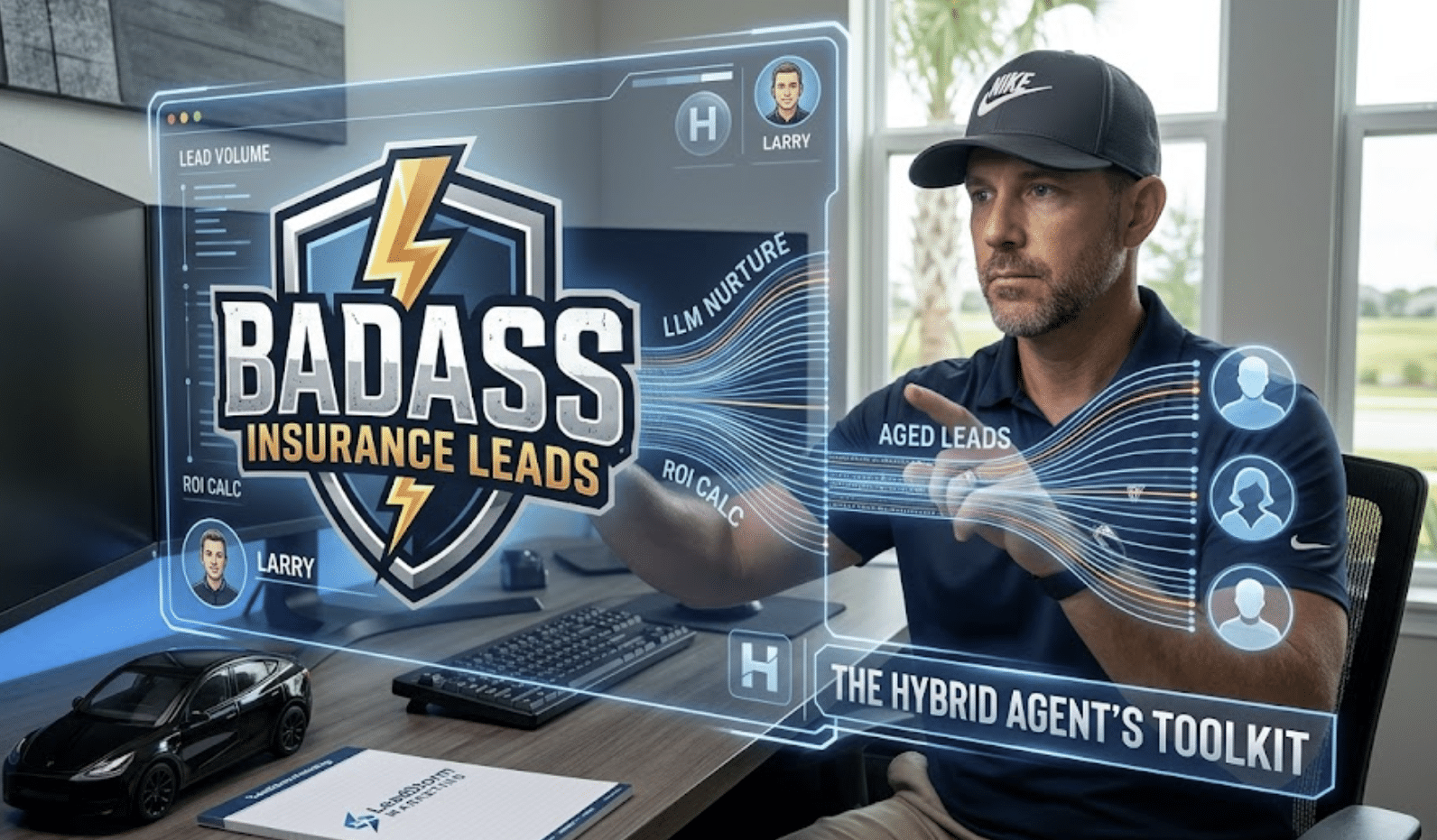
The Hybrid Model combines three distinct forces: Massive Data, Semantic Intelligence, and Human Empathy. We use Large Language Models (LLMs) not just to “write emails,” but to understand the context of the lead’s original request. By feeding your CRM data into an LLM-optimized pipeline, you can perform “Intent Extraction.”
For instance, if an aged lead was originally a What Are Aged Life Insurance Leads? prospect from six months ago, the LLM identifies the likely current pain point: “Did you ever get that burial coverage sorted, or did the rising costs of the last year make it even more of a priority?”
The 2026 Hybrid Closing Engine Workflow:
- Aged Lead Database: (1,000+ Records)
- LLM Semantic Filter: (AI Categorizes Intent)
- Automated Multi-Channel Nurture: (SMS/Email/Voice)
- Hand-Raisers Only: (Qualified Prospect identifies themselves)
- Badass Human Agent: (The Human Closer takes over)
The 3-Day Warmup Blueprint
How does a Hybrid Agent actually operate? It isn’t about spamming people. It’s about contextual re-engagement. Here is the exact blueprint for 2026:
Day 1: The Low-Pressure SMS Pulse
Instead of a “Call me now” text, the AI sends a conversational check-in: “Hey [Name], I saw you were looking into life insurance a few months back. Just curious if you ever found a plan that fit your budget, or if you’re still looking for options? – [Agent Name]’s Assistant”. This identifies “hand-raisers” without triggering a spam response.
Day 2: Value Delivery via Email
If they don’t opt-out, the AI sends a value-based email. This might include a link to an Insurance Lead ROI Calculator or an article on current industry trends. We are building authority before the call.
Day 3: The AI Voice Bridge
The AI uses a cloned voice (your voice) to leave a brief, friendly voicemail. It mentions the previous outreach and says you’ll be calling from this number in an hour just to see if they have 2 minutes to talk. By the time you dial, the lead has seen your name three times in a helpful context.
The Math of Scale: Fresh vs. Aged Hybrid
Let’s look at the ROI comparison. In 2026, “Fresh” leads have reached premium prices due to AI-driven bidding in Google Ads.
| Metric | Fresh Lead Strategy | Badass Hybrid (Aged) |
| Lead Volume | 50 Leads | 1,000 Leads |
| Cost Per Lead | $60.00 | $1.50 |
| Initial Investment | $3,000 | $1,500 |
| Conversion Rate | 8% (4 Sales) | 1.5% (15 Sales) |
| Cost Per Acquisition | $750 | $100 |
Overcoming Modern Objections
The biggest hurdle with aged leads is the “I already took care of it” objection. In 2026, the Badass Agent uses this as a pivot. If they took care of it, the AI has already flagged them for a “Policy Audit” sequence. We don’t hang up; we compare. We use our Badass Playbook for Handling Any Objection to turn a “no” into a “let me see if you’re overpaying.”
With the current 2026 rate changes, many policies written in 2024 or 2025 are now overpriced. Your aged lead pool is essentially a database of people who might be ready for a “Rate Upgrade.”
Conclusion: Becoming a Badass in 2026
To dominate the insurance game today, you must stop behaving like a 20th-century telemarketer. You need to become a tech-enabled advisor. Use the AI to do the “grunt work” of filtering out the disinterested, and save your high-value human energy for the conversations that matter. Stop chasing “fresh” leads into the ground and start mining the gold in your aged data.
Ready to build your own engine? Check out our Top AI Tools for Insurance Agents guide to get started.